During the second session of the first Test of the summer between Australia and Pakistan at the Gabba, we saw a decision so baffling that drastic measures must now be taken to prevent a similar call ever happening again.
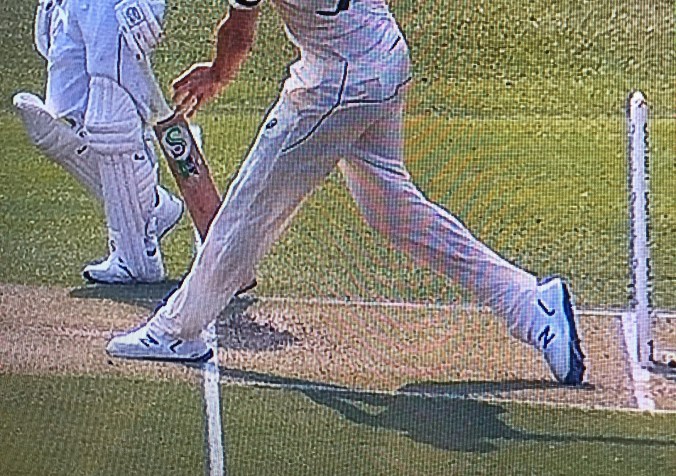
With Pakistan’s middle order looking shaky facing Australia’s trio of quicks, keeper batsman Mohammad Rizwan sparred at a rising ball outside off stump from the bowling of Pat Cummins and was caught comfortably by Tim Paine. As he departed, the umpires called for a look at the front foot of Cummins which seemed awfully close to clearing the front line in his delivery stride.
The very first replay clearly showed that no part of Cummins’ shoe had landed behind the white chalk line, nor was any part of it raised and behind the line, factors which constitute the bowling of a fair delivery. Fans groaned, Australia players dropped their heads and Rizwan started back towards the crease to continue his knock. Commentators started explaining the front foot no ball rule with great fervour, because it is so simple and clear cut, that even former players know it backwards.
English third umpire Michael Gough was having none of that first replay, instead calling for several more views. In Cummins’ favour was the playing condition that gives the bowler the benefit of the doubt if the third umpire can’t make a definitive call. Several more replays, some zoomed in, some from behind the foot, had everyone confused. Exactly what was Gough looking for? Squint your eyes really really tightly, tilt your head to the right, step through the shoe landing frame by frame and maybe, just maybe it was still clearly a no ball!
The answer to this international embarrassment is almost as clear as the no ball itself. Gough needed another opinion, he needed to step back from the decision and admit that for some inexplicable reason he could not see that which was as plain as the nose on his face. He needed to refer the decision to a fourth umpire, an expert in the rules of cricket, seated in front of the latest technology. This fourth umpire needs to be someone with reasonable eyesight and a firm grip on reality. He or she must be very familiar with the principle of that which quacks and waddles like a duck is most inevitably a duck.
Pakistan were able to recover from the fall of their sixth wicket for 143, scraping to a reasonable total of 240. Steve Smith looks set to score at least half of those runs, as long as he doesn’t fall victim to another appalling third umpire decision.
It may be too late for this first Test, but Cricket Australia has to start working with the ICC to ensure the fourth umpire system is in place before any further Tests are unfairly influenced by the current, inadequate set-up.
 Steve Hitstirrer's Insight