The hallowed turf of Lord’s has been sullied, perhaps forever, by the actions of Australia’s cricketers on Day 5 of the second Ashes Test. With England in the middle of another enthralling run chase, wicketkeeper Alex Carey lobbed the ball at the stumps of Jonny Bairstow, just before he set off for his end-of-over, mid-pitch chat with captain Ben Stokes. Carey found his target, Bairstow was well out of his crease and the Australians appealed and celebrated the vital wicket.
The laws are clear, the ball was not dead, and Bairstow was out of his crease as the bails were removed. He was inarguably out. The problem and source of unbridled outrage from those at Lord’s was that this completely sanctioned act of cricket, was just not cricket.
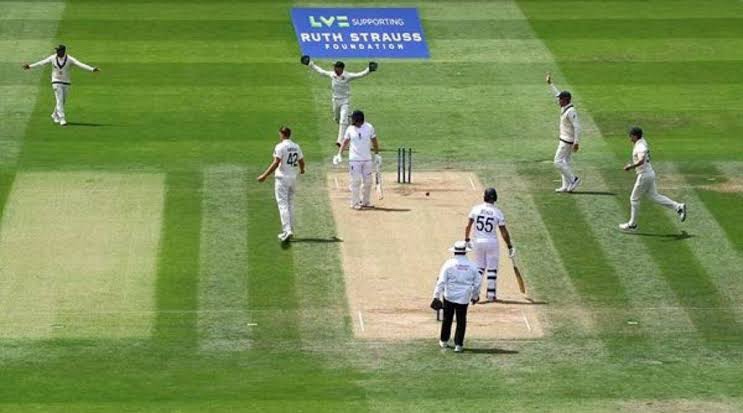
The Australians had breached the ethereal and sacred “spirit of the game”. It was an outrageous attack on everything the jacket-wearing wine-quaffing elite of the MCC members stood for and embodied.
The England players, led by moral crusader, veteran fast bowler and all-round great bloke Stuart Broad were furious at this turn of events.
Already burdened with the monumental task of saving Test cricket through their innovative and entertaining approach, England were now expected to define and champion the “spirit of the game”.
During his theatrical stay at the crease a deeply wounded Broad was heard to issue Carey the Trevor Chappellian warning: “That’s all you will be remembered for.” He was later heard to say that it was the “worst thing he had seen on a cricket field”.
After the game, captain Stokes was as calm and collected as could have been expected. It was pretty clear that he would not have felt comfortable winning that way.
“If the shoe was on the other foot, I would have put more pressure on the umpires and asked whether they had called over and had a deep think about the whole spirit of the game and if I would want to do something like that,” an indignant Stokes said.
“For Australia it was the match-winning moment. Would I want to win a game in that manner? The answer for me is no.”
His stand made it perfectly clear to anyone listening, that had Bairstow himself been successful at employing the same move against Marnus Labuschagne just two days prior, he would have asked the Australian No.3 to stay and continue his innings. Unlike the Australians, he just wouldn’t want to win that way.
England coach Brendon McCullum said Bairstow believed the umpires had “effectively called over”, which would mean the ball was dead. McCullum, perhaps more than any other coach in the history of sport, deals almost exclusively in the realm of near reality. It’s a cloudy place where bad results are given a positive spin to justify the methods being used. It must be remembered that according to McCullum it felt like England had won the First Test just a week earlier at Edgbaston.
What was absolutely real to McCullum though, was that this was a dastardly act, one which would completely rule out the sharing of a beer with the Australians. The beer ban for such behaviour may have been a precedent set by Muttiah Muralitharan back in 2006 or Colin De Grandhomme last year, we might never know.
And so we head to Headingly for the Third Test, with players and fans still seething. We can only hope the England players give their eyes a good rub and refocus on the task at hand, bringing entertainment back to Test cricket while preserving the glorious spirit of the game.
The Australians may well win the Ashes 5-0, but they have lost the hearts of many people who never had much time for them anyway. They have not only refused to bow before England’s revolutionarily cavalier manner of playing Test cricket, they have now put the laws of the game ahead of the spirit of the game. For that they might never be forgiven.
 Steve Hitstirrer's Insight